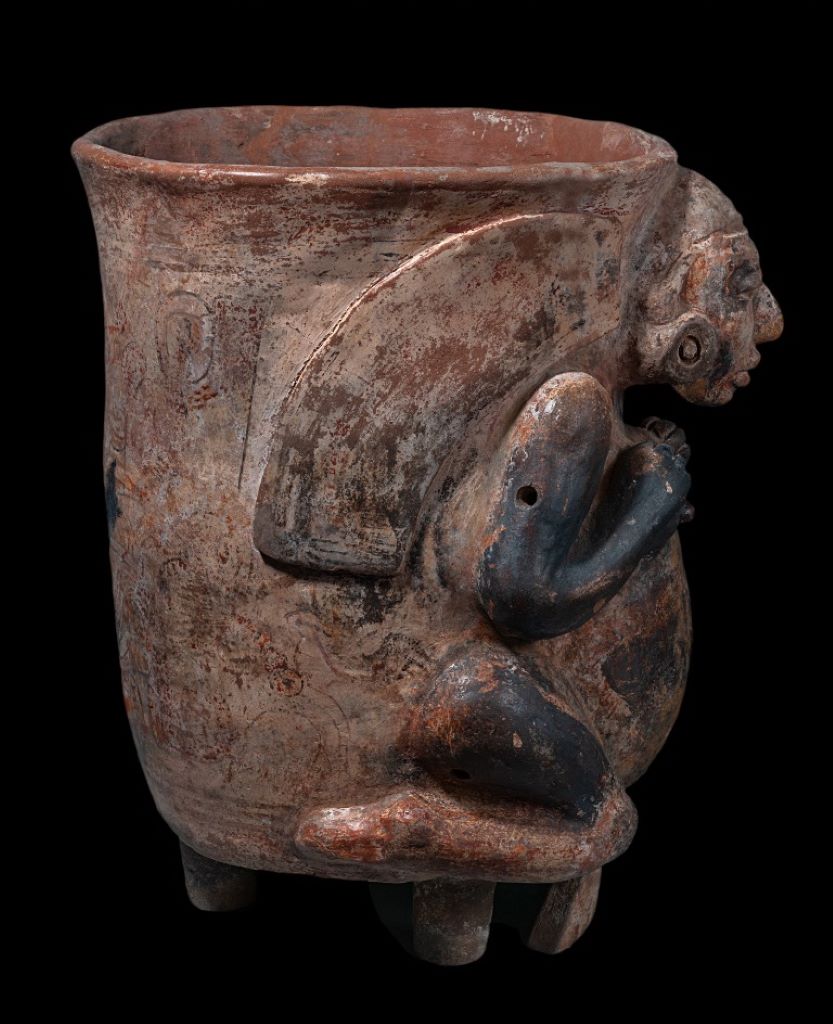
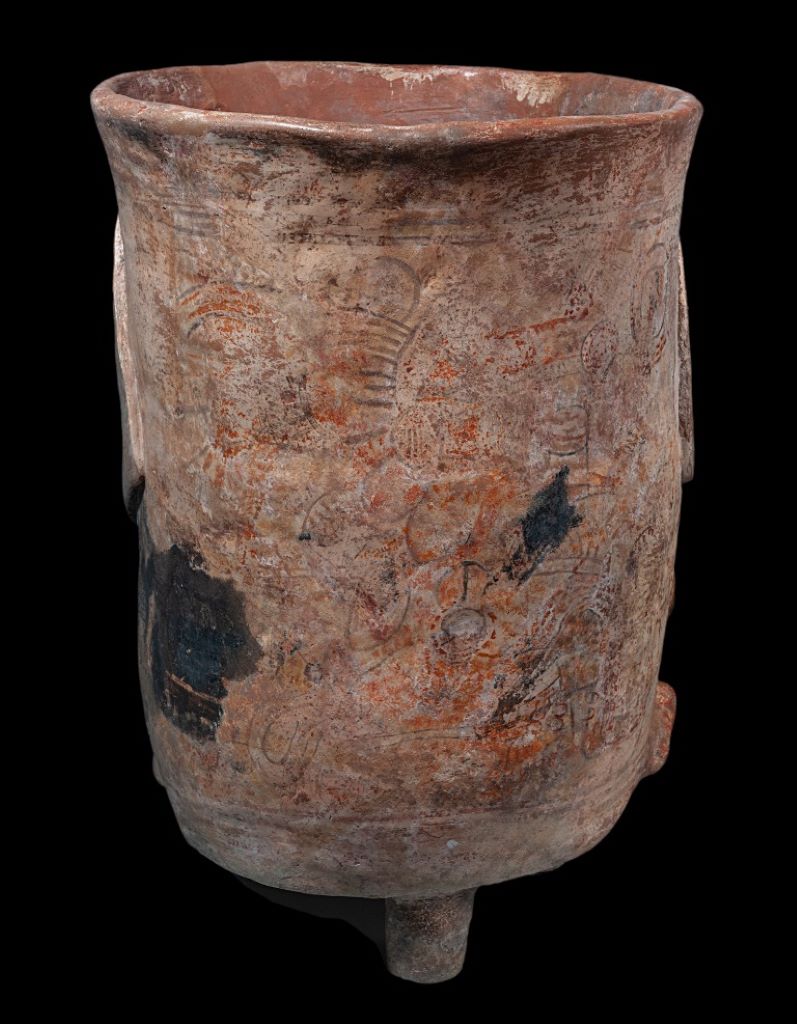
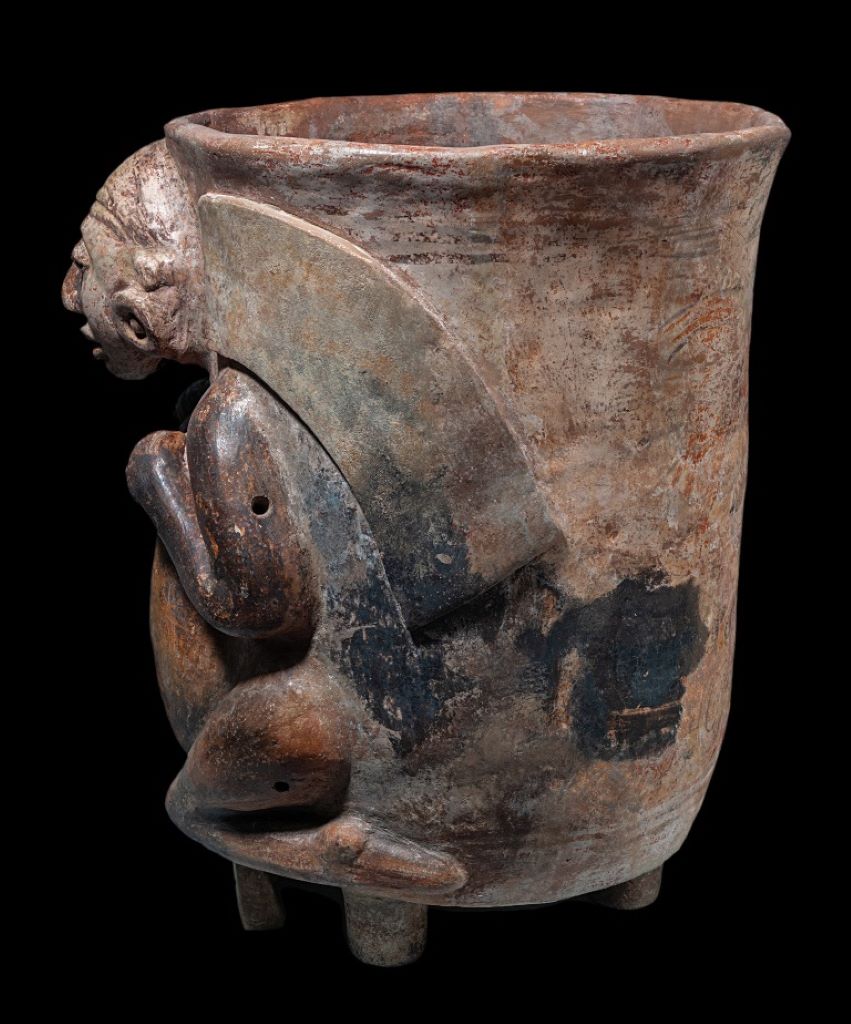
Ceramic urn depicting a woman in the traditional birthing position, with flexed legs and hands placed on the chest, suggesting the act of pushing. The figure displays a prominent belly, indicating advanced pregnancy. This squatting posture, practiced since Pre-Columbian times, eased childbirth through gravity and was assisted by a midwife. Traditionally, a rope was tied to the main beam of the house and passed under the mother’s arms to support her during labor. The opposite side of the wall (the back) presents designs that are difficult to distinguish and identify, so an iconographic study would be required using analysis equipment that allows the size of the drawings to be increased. Commentary Although the Registry of Cultural Property classifies it as originating from the Guatemalan Highlands and dating it to the Classic period (250-900 AD), the urn was found in a field in the department of Santa Rosa (southeastern Guatemala), highly fragmented. It corresponds to the Late Classic period. |