
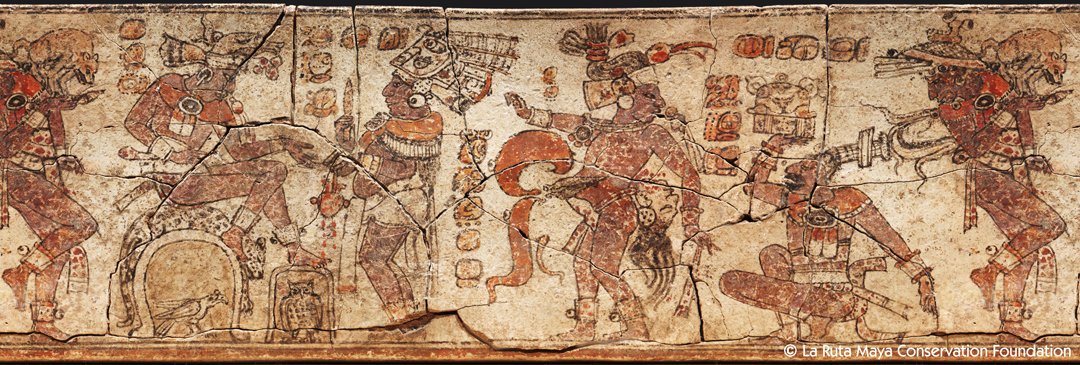
Vase with 5 characters in a supernatural sacrifice scene
01 Photograph Gallery

02 Object Information
- Description
Polychrome vase (red, orange, brown, and black on a cream background) decorated with a scene alluding to sacrifice.
In this scene, a figure is shown carrying a head hanging at waist level. In front of this figure’s face, a damaged area of the vessel obscures some details, but a set of feathers or cloth elements can still be distinguished extending toward the final glyph of the text. This visual device indicates that the painted text before the face corresponds to speech, a convention frequently seen in Maya ceramic painting.
A crouching figure is depicted next, holding a small ritual bundle or parcel. On top of this bundle, four enema implements can be identified—two at the top and two in the central area—objects associated with ritual practices in Maya ceramics. This figure has a black‑painted mouth, a feature linked in various ceramic examples to ritual specialists or shamans. It is also the only figure in the scene that wears a small circular element in front of the nose, an attribute in Maya iconography that may indicate a special or sacred quality. The left hand points downward, and the fingers are rendered with elongated or curved shapes, an artistic convention documented in figures associated with supernatural aspects. A dripping element, possibly blood, appears to fall from the fingertips.
Nearby, another figure is shown in a posture that suggests withdrawal. The face is rendered with fine features, and the figure wears an elaborate headdress with elements reminiscent of the Muan bird, frequently depicted in ritual and high‑status contexts in Maya art. Between the arm and torso, the figure holds a small quadruped with a long tail; its depiction suggests a domesticated animal, though no glyph identifies it as a way or supernatural companion, leaving its exact role uncertain.
The hands of this figure are raised in front of the chest, as if intentionally distancing from the actions of the crouching specialist. The configuration of the left hand recalls arrangements associated with the hieroglyphic sign mih, linked to the concept of beginning, although in this context it may function simply as a pictorial convention without literal glyphic value.
The other figures wear maxtatl (loincloths), jewelry, headdresses, and capes.
* Vase with rounded rim, diverging curved wall, and concave base.
* Repainted in some parts, however, the scene is correct and important enough to be properly restored.
*Donation by Dr. Francis Robicsek
- Period
- CLASSIC (150/200 A.D.-900 A.D.) Late Classic (650-900 AD).
- Provenance
- Maya Lowlands
- Medium / Material
- Clay
- Technique
- Modeled, Painting, Slip
- Dimensions
Height: 17 cm
Diameter: 15 cm
03 References and Exhibitions
- References to similar objects
Similar objects can be found in:
Kerr, Justin. Maya Vase Database. www.mayavase.com
Martin, Simon, y Nikolai Grube. 2000. Chronicle of the Maya Kings and Queens: Deciphering the Dynasties of the Ancient Maya. Thames & Hudson. 240 pp
Miller, Mary & Karl Taube. 1993. The Gods and Symbols of Ancient Mexico and the Maya. London: Thames & Hudson.
Reents‑Budet, Dorie. 1994. Painting the Maya Universe: Royal Ceramics of the Classic Period. Durham & London: Duke University Press.
Schele, Linda; & Mary Ellen Miller. 1986. The Blood of Kings: Dynasty and Ritual in Maya Art. Fort Worth: Kimbell Art Museum.
Stuart, David. 2005. Reading the Maya Glyphs. Nueva York: Thames & Hudson.
Taube, Karl A. 1992. The Major Gods of Ancient Yucatan. Washington, D.C.: Dumbarton Oaks Research Library and Collection.
Zender, Marc. 2010. The Book of Wayeb and Other Maya Numerological Traditions. Asociación Tikal / Museo Popol Vuh, Ciudad de Guatemala.
- Exhibitions
On loan to the Miraflores Museum (from 2009 until September 26, 2018)
- Publications
Published on the Literature and Mayan World page (Facebook) as “Vase of the 5 Characters”.


