
Cranium covered in stucco
01 Photograph Gallery

02 Object Information
- Description
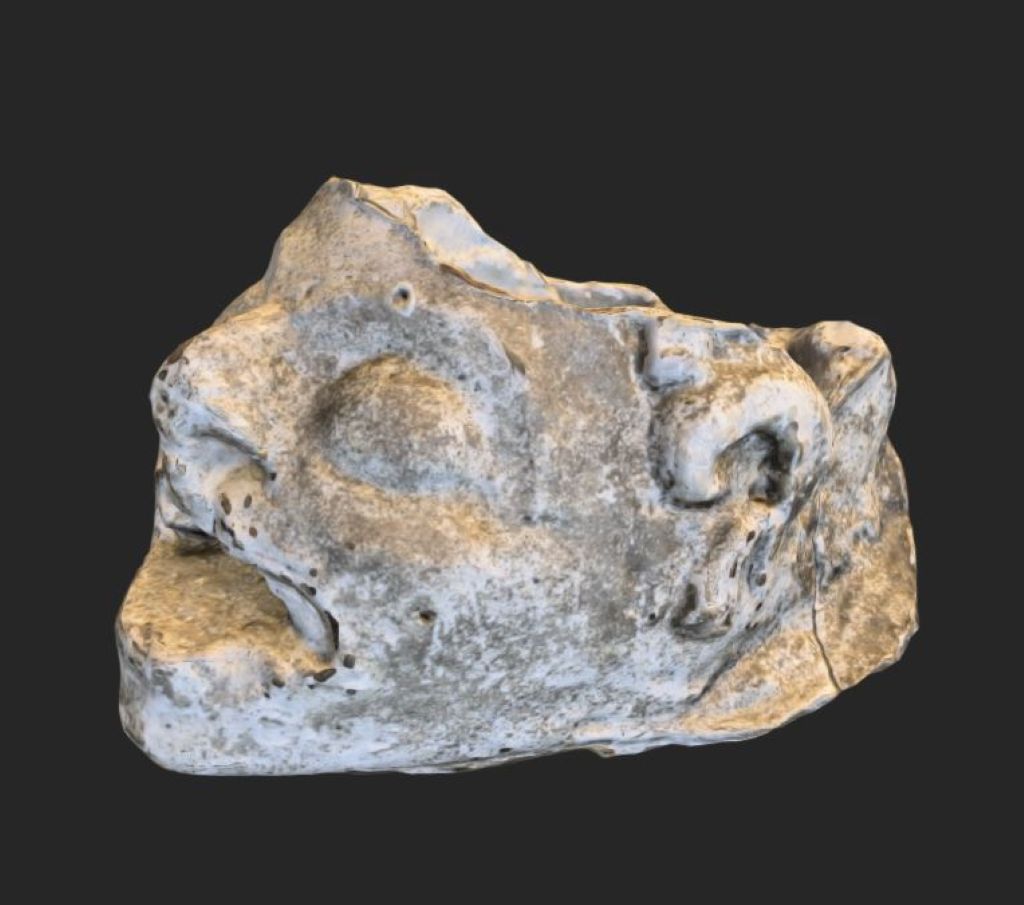
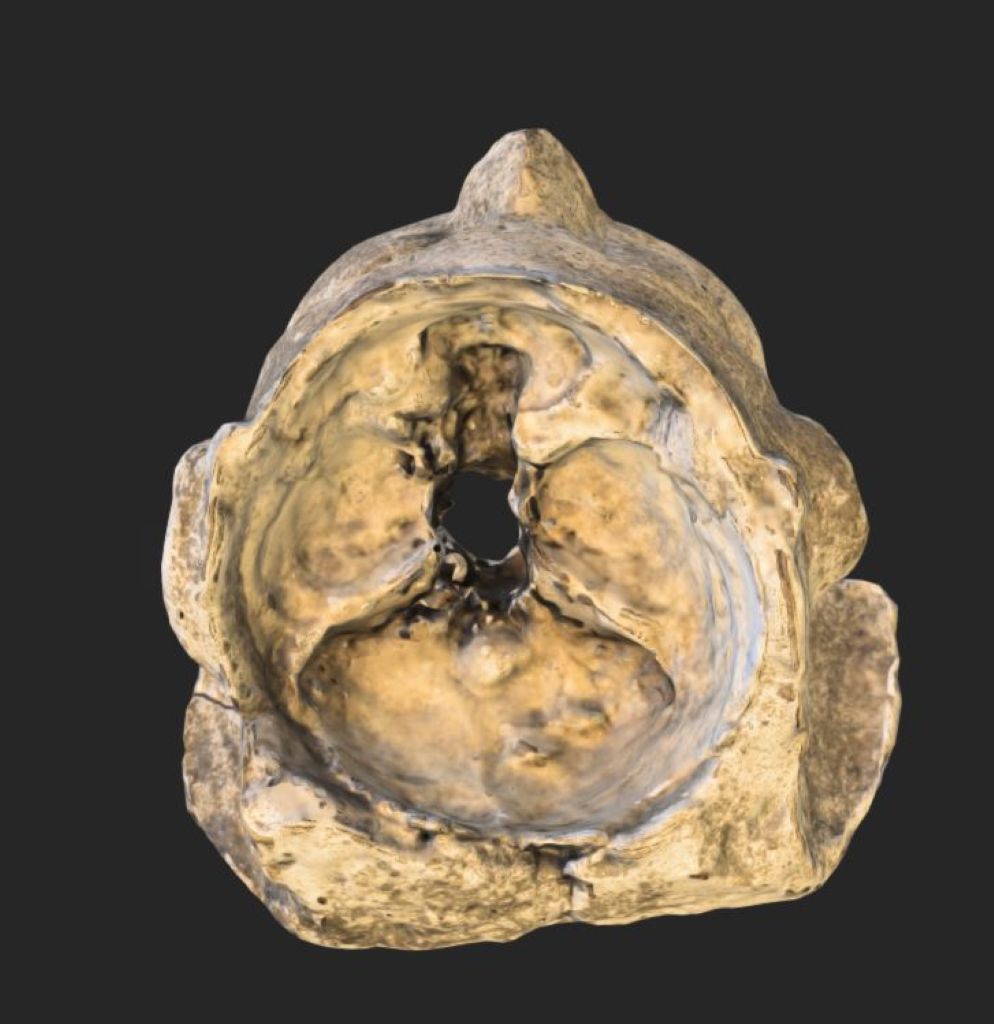
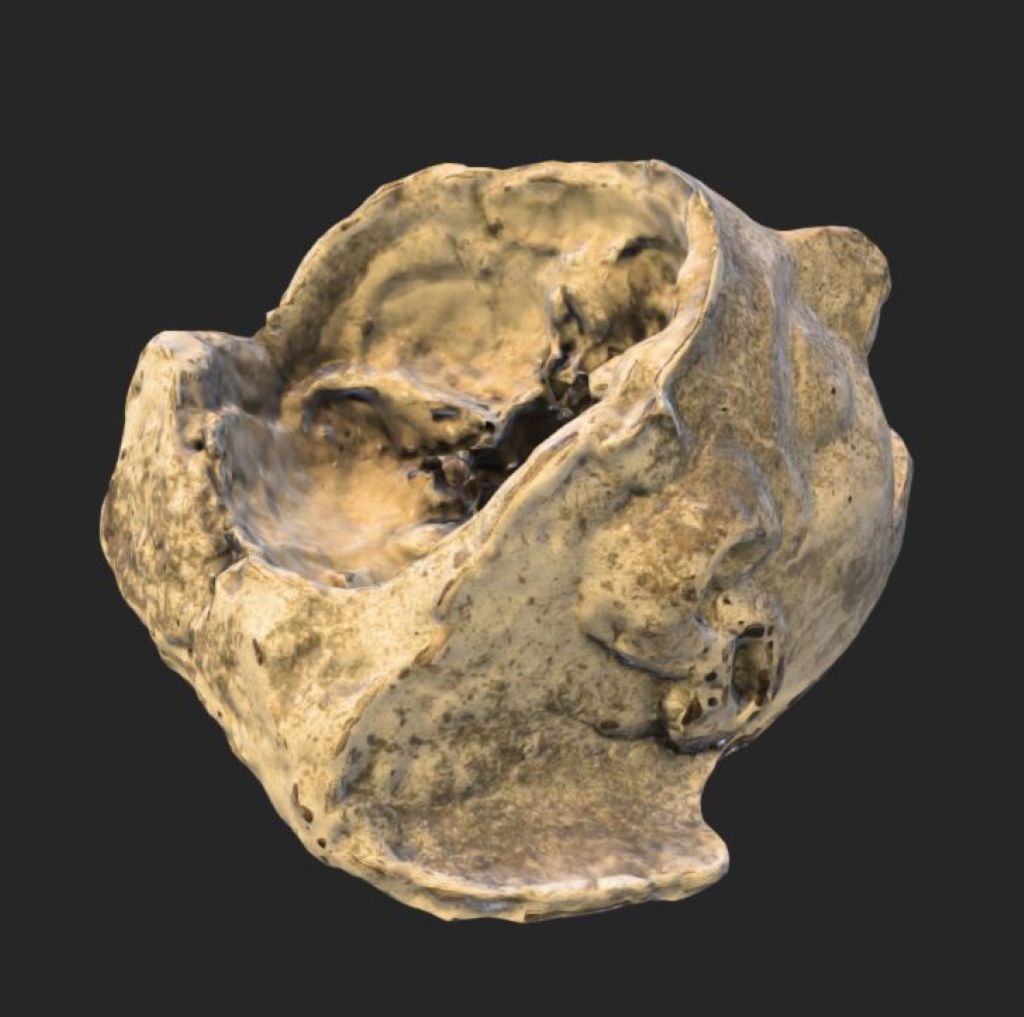
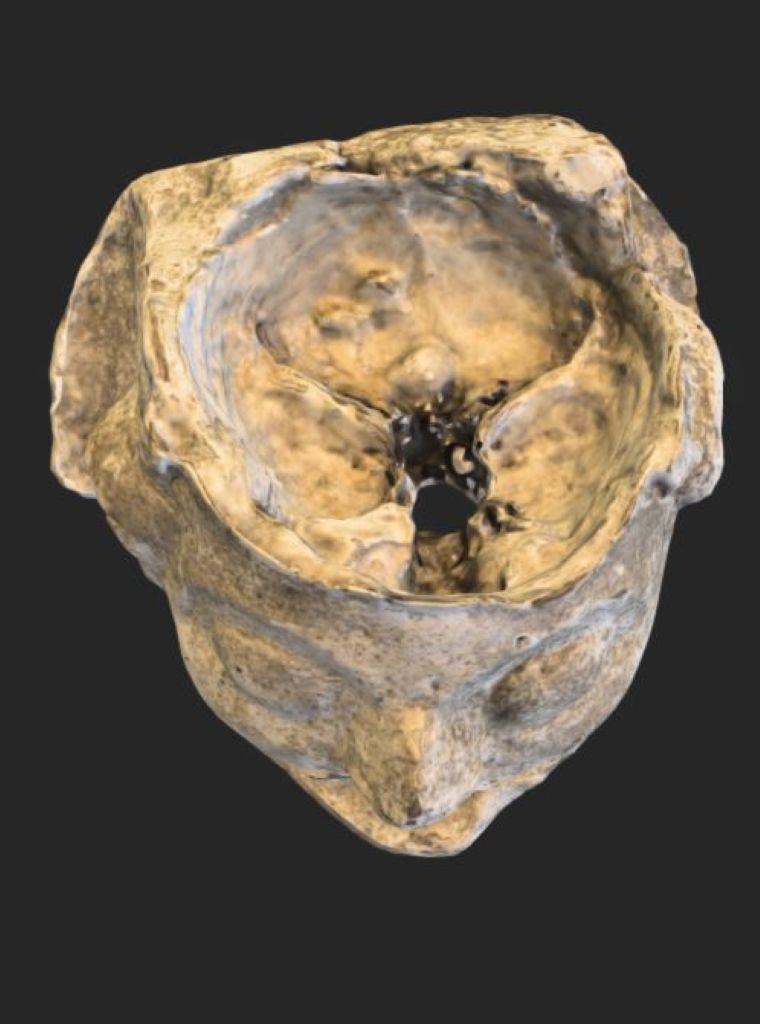
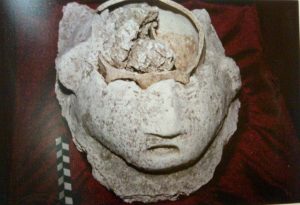
Stuccoed anthropomorphic skull, apparently female, that has teeth in both jaws and a complete cochlea. The skull is covered in stucco which was modeled to show a face with feline features, with open eyes, a prominent nose, open mouth and modeled ears.
Its features are probably those of a jaguar, given the supernatural importance of such animal in Mayan culture.
Studies
This piece was analyzed with the Carbon 14 test which dated it to the 16th century, just before the time of the Contact with the Europeans, with a 95% probability between the years 1400 and 1450 (Late Postclassic period) and, within that range, 65% between 1410 and 1440 (Analysis report by “Beta Analytic Radiocarbon Dating Laboratory” in Miami, Florida on 12/6/2007).
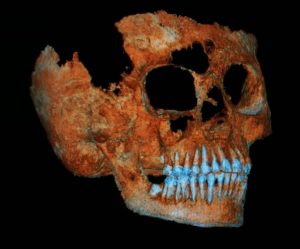
Finally, a radiological analysis was carried out (2022-2023) by Dr. Vera Tiesler (UADY, Mexico), Mtra. Luisa Mainou (INAH, Mexico), Dr. Rafael Mejicano (Centro Dental, Guatemala) and Dr. Otto Orellana (TecniScan, Guatemala).
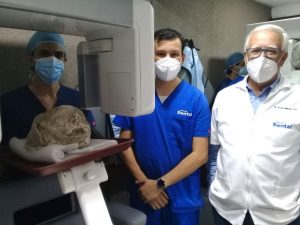
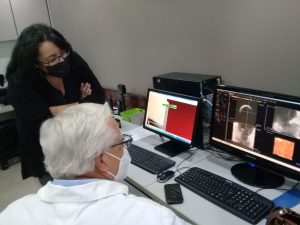
By means of Administrative Resolution No. DGPGYN 332-2023 of the General Directorate of Cultural and Natural Heritage of the Ministry of Culture and Sports, dated June 30, 2023, Dr. Vera Tiesler and Ms. Luisa Mainou Cervantes were authorized to obtain samples of (1) stuccoed anthropomorphic skull for subsequent analysis [these being: a) Three (3) small samples of the stucco covering it; b) One (1) sample of the first molar; c) One (1) sample of the third molar; and d) One (1) portion of the cochlea (the petrous part of the temporal bone)].

Main results (updated August 2026)
Through computed tomography (CT) scanning, radiographic analysis, conservation studies, bioarchaeological examination, and specialized physicochemical analyses, the research team was able to reconstruct key aspects of the life history, manufacture, and ritual significance of this extraordinary artifact.
The results indicate that the skull belonged to a young individual who died between approximately 12 and 18 years of age. Following death, the skull was transformed into a ceremonial object through a complex process involving preparation, plastering, and modeling with lime- and sand-based mortars. Radiocarbon dating places the artifact between A.D. 1400 and 1450, within the Late Postclassic period.
The research also suggests that the young man was likely beheaded and may have originated from a region other than where the object was used, given that stucco-coated skulls were typically offered to local deities. Analyses date the piece to between 1400 and 1450 CE and place its origin in the Ixil area, north of El Quiché.
According to anthropologist Iyaxel Cojtí, such objects were placed on a ledge behind an altar associated with the ballgame as part of a ceremonial offering. Researchers believe these pieces reflect the interplay of traditions and cultural influences among groups settled in what are now the territories of Mexico and Guatemala.
The study’s findings expand knowledge regarding ceremonial practices in the Guatemalan highlands during the Late Postclassic period and provide new evidence for understanding the ritual expressions of Maya societies from that era.
One of the study’s most significant contributions is the demonstration that the artifact was carefully crafted to portray a face combining anthropomorphic and feline features, possibly associated with concepts of sacred power and ritual transformation.
The research further contextualizes this artifact alongside other rare examples of stucco-covered skulls documented in the western Guatemalan Highlands, particularly in areas historically associated with Ixil and K’iche’ populations. Based on the available evidence, the authors propose that these objects formed part of ritual practices involving the public display of human heads, comparable in certain respects to the tzompantli traditions documented elsewhere in Mesoamerica.
Reference: Mejicano Díaz, Rafael et al. (2026). “A Sacred Face in the Guatemalan Highlands: Reinterpreting a Stucco-Covered Maya Skull.” Mexicon, Vol. XLVIII, No. 3, pp. 63-76, Germany.
- Period
- POSTCLASSIC (AD 900-1520) Late Postclassic (1200-1524 AD).
- Provenance
- Guatemalan Highlands
- Medium / Material
- Bone, Stucco
- Technique
- Stuccoed, Worked
- Dimensions
Height: 15.5 cm
Width: 20 cm
03 References and Exhibitions
- References to similar objects
Although the Cultural Property Register has it cataloged as from the highlands of Guatemala, the donor indicated that its origin was from the southern area of Petén.
However, chemical analyses conducted by the multidisciplinary team (Mejicano et al., 2026) indicate that the skull belonged to a young man from the South Coast or eastern Guatemala, albeit one featuring the ritual cranial preservation style of the Ixil region (Quiché).
A very similar skull is located in the storeroom of the National Museum of Archaeology and Ethnology (MUNAE), and another is on display at the Regional Museum of Santo Tomás Chichicastenango or “Rossbach Archaeological Museum” (Quiché, Guatemala), with Cultural Property Registration No. 14.1.1.770 where it is described as “Human skull with stucco of a Quichean princess.” 13 A
- Exhibitions
“THE HUMAN FIGURE AND BODY DECORATION IN PRE-COLUMBIAN TIMES.” Spanish Cooperation Training Center, Antigua Guatemala (July 17, 2016 – February 26, 2017)
“IMAGES OF THE MAYAN GODS IN THE 16th CENTURY: The Encounter of Two Worlds.” Spanish Cooperation Training Center, Antigua Guatemala (July 16, 2019 – March 1, 2020)
- Publications
Conference “Analysis of a Mayan skull covered in stucco, from the 16th century” (March, 2023). Video only in Spanish. https://youtu.be/zqukmltobAI?si=hdSWNL94928BNqap
Mejicano Díaz, Rafael; Otto Orellana; Jaquelin Cano; Katherine Marroquín Sandoval; Sofia Paredes; Iyaxel Cojtí Ren; Luisa Mainou; Rocío Albarrán; Gloria Ivonne Hernández Bolio; Patricia Quintana y Vera Tiesler. 2026. “Un rostro sagrado en el altiplano guatemalteco: Resignificando un cráneo maya recubierto de estuco”. Mexicon: Journal of Mesoamerican Studies / Revista sobre Estudios Mesoamericanos, Vol. XLVIII, No. 3, pp. 63-76. Múnich, Germany


